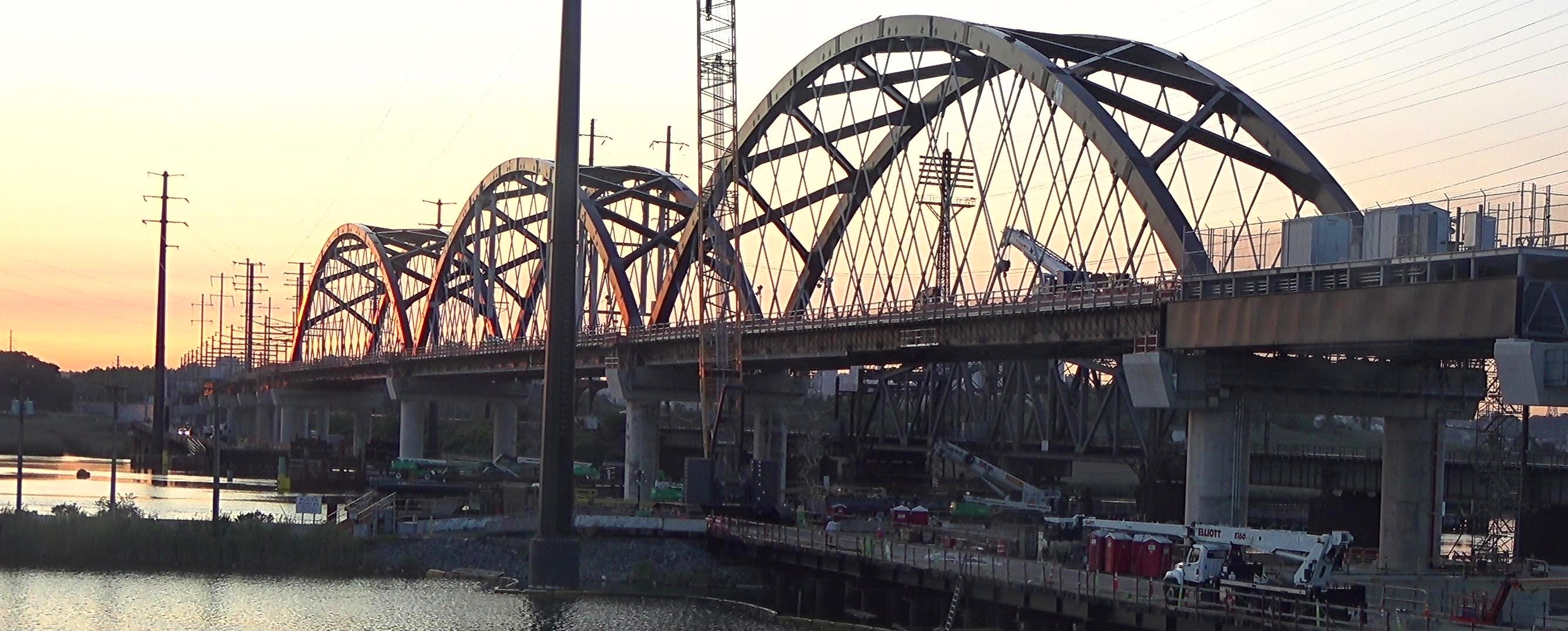
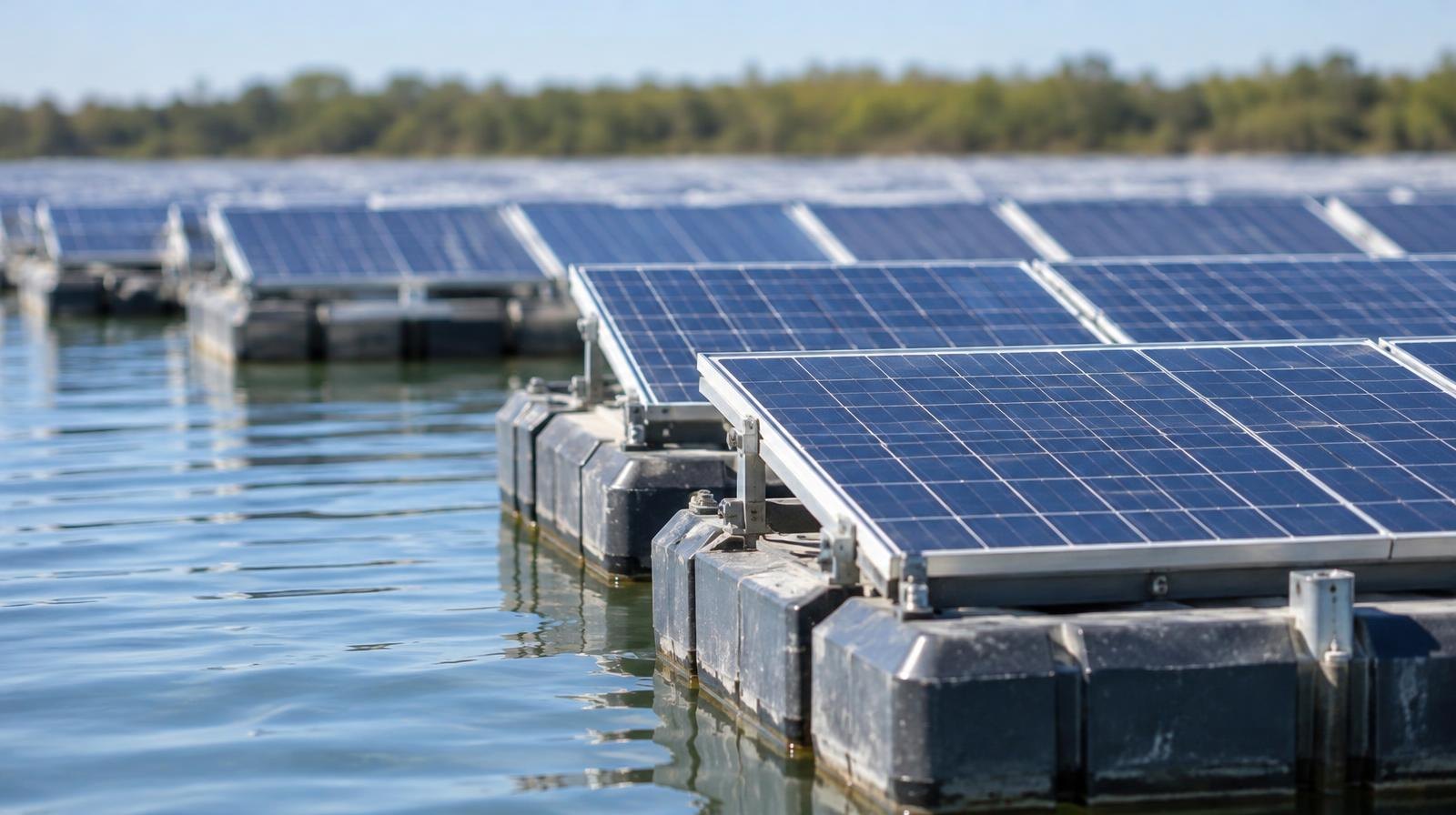
The reservoir at the Canoe Brook Water Treatment Plant in Short Hills holds the largest operating floating solar array in the United States.
The installation spans 16,510 solar panels across 17 acres of the reservoir's surface, generating 8.9 megawatts of electricity. That is enough to cover approximately 95% of the treatment plant's annual power needs, according to NJBIZ and the companies behind the project.
The Canoe Brook plant, operated by New Jersey American Water, produces 14 million gallons of drinking water per day and serves 84,000 customers. Electricity for pumps and filtration is typically a treatment plant's largest recurring cost, and the floating array offsets most of that bill without using a single acre of buildable land, Energies Media reported in an Oct. 30 feature.
NJR Clean Energy Ventures (CEV), the renewable energy subsidiary of New Jersey Resources, owns and operates the array. Solar Renewable Energy LLC developed the project, and CEV acquired it before construction began in May 2022, according to a company press release. The facility began operating in January 2023, and officials cut the ribbon on June 6, 2023.
Steve Westhoven, president and CEO of New Jersey Resources, said in the company's May 2022 press release that "floating solar technology creates new opportunities for bodies of water to be a home for large-scale renewable energy generation and bring the benefits of clean energy to even more customers."
Mark McDonough, president of New Jersey American Water, said in the same announcement that "this initiative provides a meaningful reduction of traditional energy use that benefits the environment, as well as our customers through limited capital expense and reduced power costs."
How floating panels work on a drinking-water reservoir
The panels sit on plastic pontoons strung together in modular grids and tethered to anchors on the reservoir bed, according to Energies Media. That design lets the array rise and fall with the water level.
Water cools the panels from below, which helps them convert sunlight more efficiently than panels baking on hot asphalt. And because the reservoir surface was otherwise unused, the project avoided the land-acquisition costs and competing uses that complicate ground-mounted solar in a densely built state like New Jersey.
Engineers had to clear a higher bar than a typical solar farm. Panel coatings, cabling and floats all needed to be verified safe for water destined for household taps. Crews also had to service the array without disrupting treatment operations downstream.
CEV noted the array's output equals removing 8,121 metric tons of greenhouse gas emissions compared with traditional power sources, according to NJBIZ. The panels can also help reduce evaporation, which helps protect the water supply.
The record may not last long
A 10-megawatt floating solar project at the Wanaque Reservoir, serving the North Jersey District Water Supply Commission, won approval from the New Jersey Board of Public Utilities (NJBPU). Once built, it would become the nation's largest floating solar facility, according to a NJBPU announcement. The project would cover about 20 acres, Energies Media reported.
The Wanaque proposal was rejected once over environmental concerns before winning approval on a second attempt, according to Energies Media. Until that project is built and operating, the Short Hills array holds the national record.
The Canoe Brook installation is CEV's second floating solar project. The company added a 4.4-megawatt array in Sayreville in 2020.