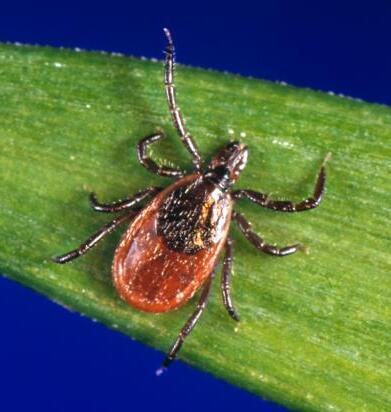
Livingston Township issued a tick safety advisory on Tuesday, July 14, warning residents to check themselves and their pets for ticks every day after spending time outdoors in grassy or wooded areas.
The warning lands during what health officials describe as an unusually severe tick season across New Jersey, with emergency room visits for tick bites at their highest level since 2017.
Statewide numbers are surging
New Jersey reported 2,975 cases of tick-borne illness and 1,022 emergency room visits related to tick bites between Jan. 1 and June 25, 2026, according to the state Department of Health. In the tri-state area, tick-related ER visits from April through June increased 20% to 30% compared with the same period in 2025, according to CDC surveillance data reported by NBC New York.
Thomas Daniels of Fordham University's Louis Calder Center, who manages the Fordham Tri-State Tick Risk Index, rated the region's risk at nine out of 10 in mid-July. "I don't want to dissuade anyone from going out and enjoying nature," Daniels told NBC New York. "Just realize that the risk is high right now."
The CDC warned in April 2026 that tick activity was "higher than normal" nationally. State health officials have confirmed that ticks capable of transmitting Lyme disease are present in all 21 New Jersey counties, including suburban neighborhoods.
Blacklegged tick nymphs, which peak from May through July, are about the size of a poppy seed. Their small size makes them especially hard to spot.
What the township advises
Livingston's official tick prevention guidance, posted on livingstonnj.org, spells out specific steps:
- Check your body after coming indoors: under the arms, in and around the ears, inside the belly button, back of the knees, in and around the hair, between the legs, and around the waist.
- Shower within two hours of returning inside, which research shows reduces the risk of Lyme disease.
- Tumble-dry clothes on high heat for 10 minutes to kill ticks on dry clothing. Wash in hot water first if clothes are dirty.
- Check pets daily, especially around the ears, neck, and legs.
For tick removal, the township advises using clean, fine-tipped tweezers to grasp the tick as close to the skin as possible and pull upward with steady, even pressure. Do not twist or jerk. Clean the bite area with rubbing alcohol or soap and water afterward.
When to see a doctor
Livingston's guidance says residents should contact a physician if a rash or fever develops within several weeks of removing a tick. In 2025, Lyme disease was the most common tick-borne illness in New Jersey, with 6,586 reported cases statewide.
Residents can reach the Livingston Township Health Department at 973-535-7961 or visit the New Jersey Department of Health's vector-borne disease page.