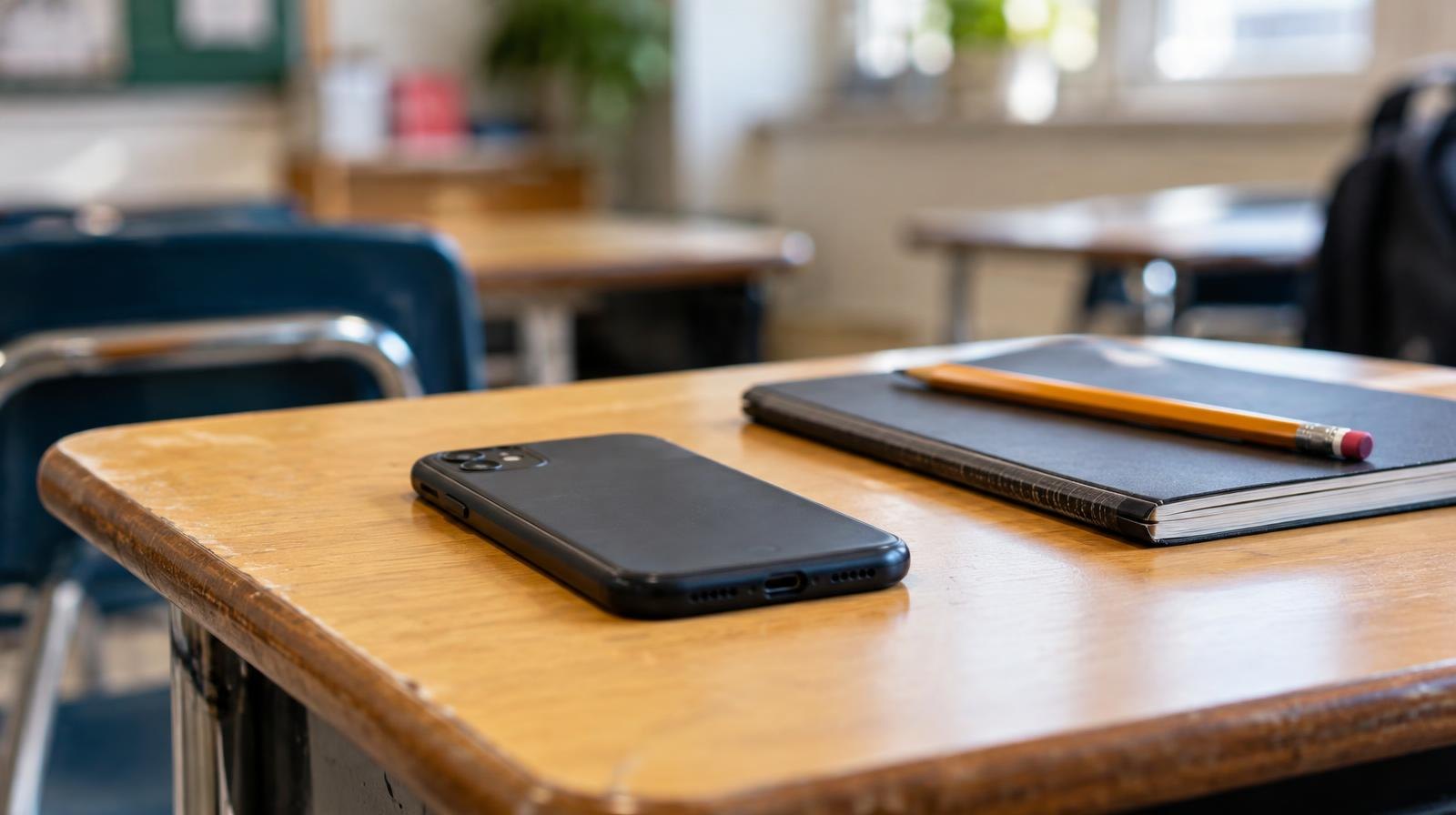
Millburn High School students can no longer pull out their phones at lunch, in the hallway or between classes. The school's new bell-to-bell phone ban took effect at the start of the 2026-2027 school year, and weeks into the policy, students are divided.
The ban stems from a statewide law signed by former Gov. Phil Murphy in January 2026. The law requires every K-12 public school in New Jersey to bar students from using smartphones, tablets, smartwatches and other internet-connected devices from the first bell to dismissal. It passed the Legislature with near-unanimous support, drawing just three "no" votes among 120 members, the New Jersey Monitor reported.
The Millburn Board of Education formally adopted the policy at its July 20 meeting. Superintendent Kate Diskin set the tone for the district's approach, according to TAPinto Millburn/Short Hills: "We don't have to love it, we just have to implement it."
Board members Jeffery Cassin, Asaf Farashuddin and Abby Speltz said they wanted more flexibility in how the district applies the policy so it can be tailored to Millburn's students, teachers and community.
Some students say the change is working. Anaya Pathak, a Millburn High student, told The Miller, the school's student newspaper, that she finds herself reaching for her phone less each day. Fellow student Era Jog said the policy could help improve grades and focus.
Others are frustrated. Rajasvi Gangwal told The Miller that finding friends at lunch without texting is a challenge. Jina Lee called the ban unnecessary, saying students cannot contact friends and family and that the district could focus on more pressing issues.
Parents across the state have raised safety concerns about the ban. Betsy Ginsburg, executive director of the Garden State Coalition of Schools, told the New Jersey Monitor that the most common parent complaint is worry about reaching children during emergencies. School security experts, however, advise against students being on phones during lockdowns, Ginsburg said.
The law does allow exceptions for emergencies, translation services and when a device is part of a student's curriculum.
Millburn is not alone in navigating the new rules. The Livingston Board of Education voted at its Aug. 20 meeting to adopt its own bell-to-bell ban. Livingston Superintendent Mark Stern described the scope at that meeting, telling the West Essex Tribune that the policy covers smartphones, smartwatches, smart glasses, tablets and Bluetooth-enabled headphones and earbuds.
The state law leaves enforcement details to individual districts. The Department of Education released guidance over the summer, but how Millburn High enforces the ban day to day has not been publicly detailed.