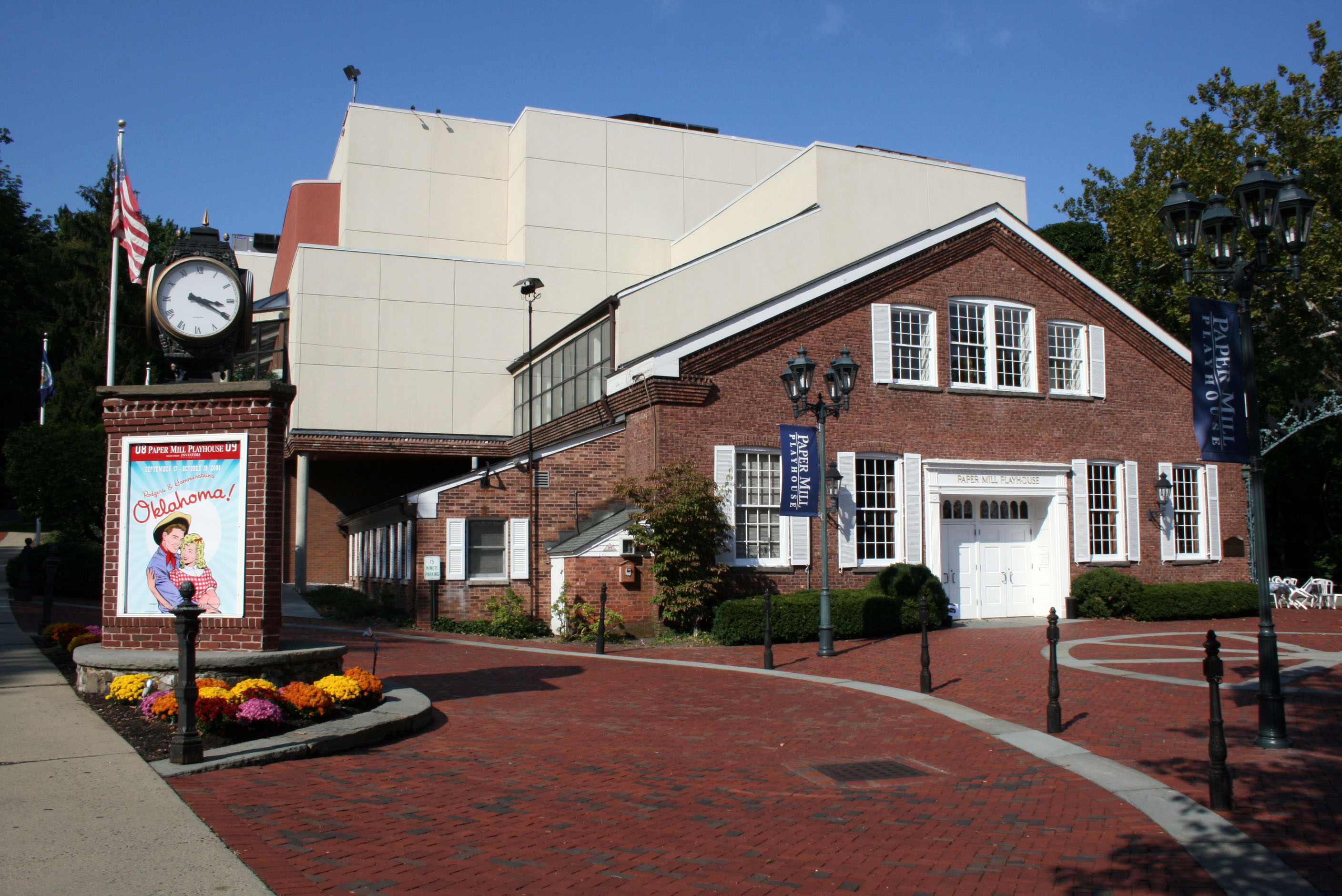
Construction crews are already at work on Paper Mill Playhouse's biggest transformation in decades. The Millburn theater's Front of House renovation, which began July 1, will replace the aging lobby with a new two-story entrance featuring a box office, concessions, grand stairs and elevators, ADA-compliant restrooms, and an enlarged donor lounge.
How it's getting funded.
The project is backed by up to $24.8 million in state tax credits, approved by the New Jersey Economic Development Authority on July 22 under its Cultural Arts Facilities Expansion program — part of a larger $68.1 million allocation shared with the Rialto Center for Creativity in Westfield. "The patron experience at Paper Mill will be greatly enhanced and improved for generations to come," Executive Director Mike Stotts said in the NJEDA's announcement, pointing to mechanical, electrical and plumbing systems he called "severely outdated and inefficient." The credits are one piece of Paper Mill's broader Next Act campaign, a $48.7 million effort to overhaul the entire campus — with $7 million still to be raised as of late July.
A theater the town takes real pride in.
Millburn Mayor Frank Saccomandi called Paper Mill "our crown jewel," adding, "We're incredibly lucky to have a theater of this caliber right here in Millburn."
What this means for the upcoming season.
The renovation will limit seating and shorten the mainstage season, creating an anticipated $3 million deficit the campaign is expected to help cover, according to a township agenda document. The mainstage season is set to return in November, with the full Front of House project wrapping in September 2027.
Why it matters beyond Millburn.
Paper Mill Playhouse, founded in 1938, is New Jersey's largest producing theater, drawing more than 200,000 patrons a year, including about 40,000 students. A 2024 economic impact report found the theater generates $65 million in economic output statewide, with more than $34 million flowing directly into Millburn — a reminder that this 88-year-old stage is as much an economic engine as a cultural one. The redesigned entrances will finally clear accessibility barriers that have limited the building for decades, replacing restrooms the theater itself has called outdated and undersized.